Rating: 2.5 / 5 Stars
Cast: Vijay Deverakonda, Rashmika Mandanna, Arnold Vosloo
Director: Rahul Sankrityan
Music: Ajay-Atul
Runtime: 2 Hours 45 Minutes
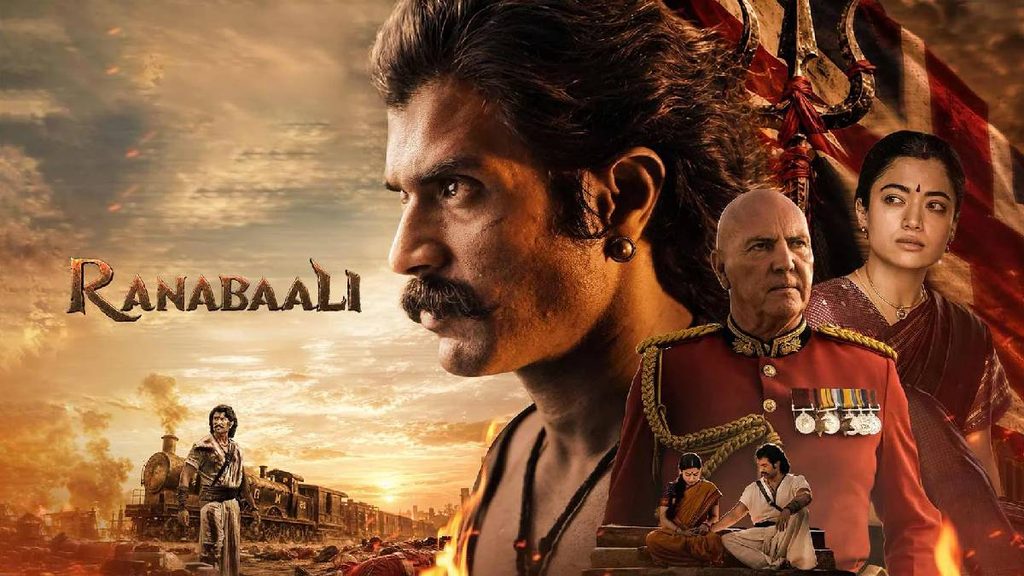
Revisiting the darkest chapters of history requires a delicate balance of emotional depth, historical authenticity, and cinematic grandeur. Releasing in theaters worldwide today (October 16, 2026), the massive pan-India Telugu epic Ranabaali attempts to strike this exact balance. Directed by Rahul Sankrityan and co-written by Pramod Tammineni, the film dives deep into the devastating Great Madras Famine of 1876–1878, blending harsh historical realities with the soaring folklore of rebellion.
Starring Vijay Deverakonda and Rashmika Mandanna—one of Indian cinema’s most beloved on-screen pairings—the film carries the immense pressure of sky-high expectations. While it successfully delivers visual splendor and a few outstanding mass elevation moments, early audiences and critics have pointed out glaring pacing issues that hold it back from becoming a timeless masterpiece.
Here is our comprehensive, detailed review of Ranabaali, breaking down what works and where the period drama falters.
The Premise: A Forgotten Past Is A Stolen Future
The thematic core of Ranabaali is built on a powerful ideology: “A forgotten past is a stolen future.” Instead of focusing on kings and queens, the film shifts its lens to the marginalized, famine-stricken masses of 1870s South India who were subjected to brutal exploitation under British colonial rule.
Vijay Deverakonda steps into the titular role of Singanamala Bobbili Ranabaali, a fierce, folklore-inspired local warrior who refuses to watch his people succumb to starvation and imperial cruelty. Standing shoulder-to-shoulder with him is his wife and partner in the struggle, Jayamma (played by Rashmika Mandanna).
Their desperate fight for survival puts them in the crosshairs of the ruthless British commissioner Sir Theodore Hector, played menacingly by Hollywood actor Arnold Vosloo (The Mummy fame). What follows is a brutal, bloody war of resistance against an empire that views human lives as highly expendable commodities.
What Works: Sincere Intent, Crackling Chemistry, and Visuals
The undisputed highlight of Ranabaali is the magnetic on-screen presence of its lead pair. Vijay Deverakonda delivers a physically demanding, ferocious performance. His portrayal of the rugged warrior is filled with raw intensity, and his commanding dialogue delivery gives his massive fanbase the “mass” comeback they have been eagerly waiting for.
Rashmika Mandanna is equally brilliant. Jayamma is not relegated to being a mere spectator; she is an active, fiery participant in the rebellion. The crackling, emotional chemistry between Vijay and Rashmika serves as the beating heart of the film, providing much-needed emotional relief amidst the grim historical backdrop.
Director Rahul Sankrityan’s sincere intent to bring this forgotten tragedy to the mainstream is commendable. The production design and cinematography effectively recreate the harrowing, dusty atmosphere of the famine. The first half sets up the conflict beautifully, culminating in a highly captivating and adrenaline-pumping pre-interval sequence that leaves the audience asking for more.
What Doesn’t Work: A Tiresome Second Half and Underwhelming Music
Unfortunately, Ranabaali becomes a victim of the second-half curse. Following a massive interval high, the screenplay completely loses its steam. The narrative becomes incredibly predictable, relying on repetitive tropes that we have seen in countless period dramas before. Instead of building emotional resonance, the story drags, making the 2-hour-and-45-minute runtime feel exhausting.
Another major point of criticism is the film’s reliance on senseless, graphic violence. While showcasing the brutality of the British regime was necessary, the sheer volume of excessive bloodshed in the latter half eventually numbs the viewer, detracting from the actual emotional impact of the famine.
Furthermore, the background music—a crucial element for elevating any historical epic—is a surprising letdown. Composed by the legendary duo Ajay-Atul, the score fails to inject the necessary goosebumps into the action sequences, save for a couple of well-placed songs. The pacing issues and the underwhelming BGM ultimately dilute the impact of Arnold Vosloo’s villainous arc, which ends up feeling somewhat generic.
The Final Verdict
Ranabaali is a film of grand ambitions and spectacular visual scale that struggles with its execution. It is a sincere attempt at storytelling that ultimately reaches a saturation point in its second half due to predictable writing and a laggy screenplay.
However, if you are a die-hard fan of Vijay Deverakonda and Rashmika Mandanna, their stellar performances and undeniable chemistry make this film a decent one-time theatrical watch.
Frequently Asked Questions (FAQs)
What is the story of the Ranabaali movie?
Set in 1870s South India against the backdrop of the devastating Great Madras Famine, the film follows a local rebellious warrior named Singanamala Bobbili Ranabaali as he fights against oppressive British colonial rule to protect his people from starvation and cruelty.
Who is the villain in Ranabaali?
Hollywood actor Arnold Vosloo, globally recognized for his role in The Mummy franchise, plays the primary antagonist, a ruthless British commissioner named Sir Theodore Hector.
How is the chemistry between Vijay and Rashmika in Ranabaali?
The chemistry between Vijay Deverakonda and Rashmika Mandanna has been universally praised by critics and audiences, with many citing their dynamic as the emotional anchor and the strongest aspect of the entire film.
Is Ranabaali appropriate for family audiences?
The film has been granted a U/A certificate, but viewers have noted that it contains highly graphic and excessive violence depicting colonial atrocities, which may not be suitable for younger or highly sensitive audiences.