When Nishikant Kamat adapted Jeethu Joseph’s Malayalam masterpiece in 2015, Drishyam became an instant cultural touchstone. The story of a simple, fourth-standard-fail cable operator outsmarting the entire police force through raw cinema trivia and obsessive observation resonated deeply with Indian moviegoers. The 2022 sequel, directed by Abhishek Pathak, managed an almost impossible feat: it maintained that razor-sharp tension while raising the emotional stakes.
Now, with Drishyam: The Conclusion, the saga of Vijay Salgaonkar and his family reaches its curtain call. Pathak returns to the director’s chair with an ambitious goal—to tie up every lingering loose end, bring legal and emotional closure, and stage an epic final game of chess.
The result is a film that delivers heart-in-mouth suspense and exceptional acting clashes, even while occasionally asking its audience to suspend disbelief far more than this franchise ever needed to in the past.
The Plot: The Past Never Truly Dies
Set years after the events of the second film, Goa has seemingly moved on, but the Salgaonkar household remains trapped in an invisible prison. The trauma of October 2nd still hangs heavy over Nandini (Shriya Saran), Anju (Ishita Dutta), and Anu. Vijay (Ajay Devgn), now visibly older and burdened by the psychological toll of protecting his family, runs his movie theater while keeping a vigilant eye on every corner of his world.
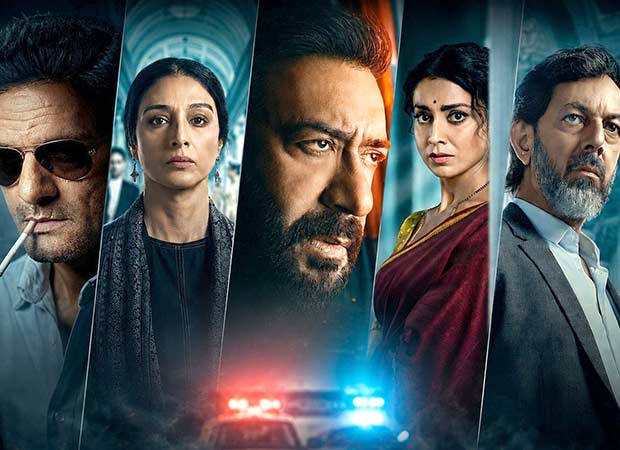
The peace is shattered when the unresolved investigation into Sameer Deshmukh’s disappearance is reopened under unprecedented circumstances. Enter Rajveer (Jaideep Ahlawat), an uncompromising, unorthodox investigator with no emotional baggage regarding the case—only cold, forensic obsession. Spurred on by the relentless, grieving Meera Deshmukh (Tabu) and her husband Mahesh (Rajat Kapoor), Rajveer isn’t interested in routine interrogations; he intends to dismantle Vijay’s psychological armor piece by piece.
When the legal machinery drags the case into the courtroom, high-profile advocate Indrajith Shetty (Prakash Raj) steps into the arena, turning a private guilt into a blistering public trial.
What Works: Acting Titans in a High-Stakes Arena
The undeniable strength of Drishyam: The Conclusion lies in its casting and character dynamics.
The Masterclass of Ajay Devgn
Devgn understands Vijay Salgaonkar down to his marrow. He doesn’t play Vijay as an invincible action hero; he plays him as a weary, haunted father who has lived in fear for over a decade. Devgn communicates volumes through stillness—the slight twitch of an eyelid, the tired slump of his shoulders, and the cold calculation behind his eyes.
Jaideep Ahlawat: The Franchise’s Best Foil
If Akshaye Khanna brought cynical swagger to Drishyam 2, Jaideep Ahlawat brings genuine dread. His Rajveer feels formidable, grounded, and terrifyingly perceptive. The pre-interval confrontation between Devgn and Ahlawat is easily the film’s finest hour—a masterclass in restrained fury, sharp pauses, and psychological tension that does not require a single raised voice.
Tabu and Prakash Raj Elevate the Material
Tabu remains the beating emotional heart of the opposition. Her Meera is no longer just an aggressive cop; she is a mother hollowed out by grief and fueled by vengeance. Prakash Raj brings theatrical flair and sharp wit to the courtroom sequences, cutting through the heavy gloom with measured dialogue delivery that keeps the courtroom drama lively.
Technical Craft
Amar Mohile’s background score deserves special mention. Stripping away unnecessary songs allows the score to do the heavy lifting, using pulsing basslines and eerie strings to turn mundane sequences—a lingering look at a shovel, a car parked on an empty road—into nail-biting set pieces.
What Stumbles: Plot Convenience vs. Meticulous Logic
Where Drishyam: The Conclusion shows visible strain is in its narrative architecture.
The brilliance of the first two films rested on meticulous, airtight planning. Every move Vijay made felt organic—rooted in human psychology, routine habits, and everyday slips. In The Conclusion, however, several critical twists rely on astonishing strokes of good fortune and plot conveniences that stretch credulity. Certain surveillance and forensic loopholes are glossed over simply because the script needs Vijay to stay one step ahead.
Furthermore, the pacing in the post-interval section wobbles. The film spends considerable time setting up legal technicalities that feel slightly repetitive before rushing through a high-octane climax that doesn’t quite grant its revelations the emotional breathing room they deserve.
Another noticeable casualty is Shriya Saran’s Nandini. While the earlier films gave her genuine vulnerability and moral conflict, she is largely sidelined here, reduced to anxious reaction shots while the men wage war in interrogation rooms and courtrooms.
Verdict: A Worthy, If Imperfect, Farewell
Drishyam: The Conclusion may not completely recapture the unblemished brilliance of the 2015 original, but it avoids the catastrophic pitfalls that usually derail third installments in suspense franchises. It treats its core characters with respect, refuses to dilute its gritty tone with unnecessary commercial compromises, and delivers a cat-and-mouse dynamic between Ajay Devgn and Jaideep Ahlawat that alone justifies the price of admission.
For fans who have followed the Salgaonkar family since that fateful Gandhi Jayanti weekend in Panjim, this finale provides a gripping, dramatic, and emotionally resonant send-off—even if the magic trick requires a little more willing suspension of disbelief this time around.
Rating: 3.5 / 5 Stars
Frequently Asked Questions (FAQs)
Is Drishyam: The Conclusion the final film in the franchise?
Yes, as the title indicates, Drishyam: The Conclusion is designed to provide narrative and emotional closure to the Vijay Salgaonkar saga, wrapping up the long-running mystery surrounding the Deshmukh case.
Who directed Drishyam: The Conclusion?
The film is directed by Abhishek Pathak, who previously directed the 2022 box office hit Drishyam 2.
How is Jaideep Ahlawat’s role in Drishyam 3?
Jaideep Ahlawat plays Rajveer, a sharp and relentless investigator brought in to crack the case. His performance has been widely praised as one of the standout elements of the film, particularly his intense face-offs with Ajay Devgn.
Can you watch Drishyam: The Conclusion without watching the previous parts?
While the film includes brief callbacks and context clues, watching Drishyam (2015) and Drishyam 2 (2022) is essential to fully grasp the emotional stakes, character relationships, and long-standing trauma driving the plot.